The Commercial Value of Charcoal Production from Palm Waste

The growing demand for sustainable and eco-friendly energy sources has positioned charcoal production from agricultural waste as a viable alternative to traditional methods. Among various organic materials, palm waste has emerged as a significant resource for producing high-quality charcoal, particularly from palm kernel shells. This shift toward utilizing palm waste offers several economic and environmental benefits, including waste reduction, energy production, and sustainable resource management. By harnessing the potential of advanced charcoal machines, businesses can optimize production processes, meet market demands, and drive profitability.

Palm Kernel Shell Charcoal Machine

Economic Benefits of Charcoal Production

The palm industry, particularly in tropical regions, generates vast quantities of waste material, including palm kernel shells, which are typically discarded or left to decay. Converting these byproducts into valuable products like charcoal opens up new avenues for revenue generation. Charcoal made from palm kernel shells, for example, is highly regarded for its efficiency and sustainability, which makes it an attractive option for both domestic and international markets.

The process begins with the use of a specialized charcoal manufacturing machine, which facilitates the pyrolysis of palm kernel shells. This method involves heating the shells in a controlled environment, breaking down their organic components into carbon-rich charcoal. The machine’s efficiency and precision play a crucial role in maximizing the yield of charcoal while minimizing energy consumption and operational costs.

By establishing production facilities in regions abundant with palm plantations, companies can create a cost-effective supply chain. This process not only adds value to agricultural waste but also provides an additional income stream for local communities involved in palm cultivation. The byproducts of this process, such as charcoal dust and biochar, can be repurposed for various industrial applications, further enhancing the profitability of the venture.

Market Demand for Sustainable Charcoal

Global trends indicate a significant shift towards eco-friendly alternatives in various industries, especially in energy, agriculture, and manufacturing. Palm kernel shell charcoal is increasingly sought after due to its low emissions and high calorific value, making it an ideal fuel for industrial processes and cooking. Additionally, palm kernel shell charcoal is used in the production of activated carbon, which finds applications in water filtration, air purification, and even medicine.

The demand for sustainable charcoal is especially prominent in regions that have stringent environmental regulations. Countries are continuously seeking carbon-neutral alternatives to replace traditional coal and wood charcoal. Palm kernel shell charcoal, being a renewable resource, is an attractive option for industries looking to reduce their environmental footprint while maintaining efficiency.

Furthermore, palm kernel shell charcoal is highly competitive in the global market due to its affordable production cost and versatile applications. The low-cost raw material, coupled with the advanced technologies employed in biomass pyrolysis plant operations, ensures that the final product is both cost-effective and of high quality.

Install BST-10 Palm Kernel Shell Charcoal Machine in Indonesia

Environmental Impact and Sustainability

The environmental benefits of producing charcoal from palm waste are significant. Palm kernel shells, when left unchecked, can contribute to pollution and deforestation. By utilizing this waste material, the process effectively reduces the environmental burden associated with palm oil production.

The sustainable nature of palm kernel shell charcoal production is enhanced by the fact that it is a form of waste-to-energy technology. Palm kernel shells are often burned inefficiently or left to decompose, releasing harmful greenhouse gases into the atmosphere. However, by converting these shells into charcoal, harmful emissions are significantly reduced. The process itself is designed to capture and store the released gases, which can be used for energy generation, making the process not only carbon-neutral but potentially even carbon-negative when optimized.

Additionally, the high energy efficiency of palm kernel shell charcoal makes it an environmentally preferable option compared to traditional fuels. Its dense carbon content allows it to burn hotter and longer, reducing the need for frequent replenishment and minimizing fuel consumption.

Technological Advancements in Charcoal Production

The development of more efficient charcoal machines has played a pivotal role in enhancing the commercial viability of charcoal production from palm waste. Modern machines are designed to optimize the pyrolysis process, ensuring higher yields and reducing the time required for production. These machines also allow for better control over temperature, pressure, and airflow, which are critical factors in determining the quality of the final charcoal product.

Moreover, automation and smart technologies are increasingly integrated into charcoal machine operations, improving overall efficiency and reducing labor costs. The ability to scale up production using automated systems is particularly beneficial for businesses looking to meet large-scale demand while maintaining high-quality standards. To obtain advanced equipment, please contact Beston Group Co., Ltd.

The future of charcoal production from palm waste will likely see further innovations, such as the use of renewable energy sources to power charcoal machines or the development of biochar applications for soil improvement. These advancements will not only enhance the profitability of the business but also contribute to a more sustainable and environmentally conscious approach to energy production.
Internal Reaction Mechanism of a Tyre Pyrolysis Reactor

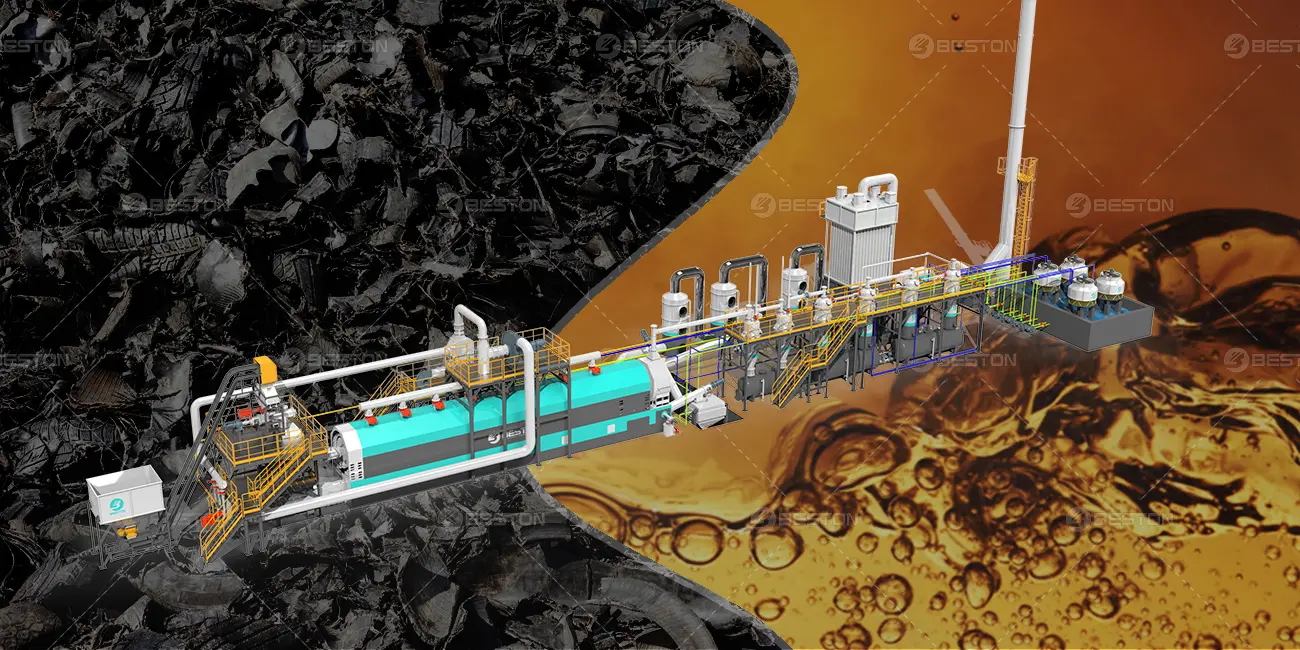
The tyre pyrolysis process is a complex thermal decomposition of tyres in the absence of oxygen. The internal reaction mechanism within a tyre pyrolysis reactor is crucial to understanding how waste tyres are converted into valuable products such as oil, gas, and carbon black. The reactor operates under specific temperature and pressure conditions that influence the chemical breakdown of the tyre components. This article delves into the internal reaction processes that occur within a waste tire pyrolysis plant and the factors that impact the efficiency and output of the system.

Tyre to Oil Plant

The Pyrolysis Process in a Tyre Pyrolysis Reactor

Pyrolysis refers to the thermal decomposition of organic materials at high temperatures, typically between 350°C and 700°C, in the absence of oxygen. In the case of a tyre pyrolysis reactor, the feedstock, consisting of waste tyres, is subjected to these high temperatures in a controlled environment. The tyres are primarily composed of rubber, steel, and other organic materials such as oils and carbon black. The primary objective of the pyrolysis reactor is to break down these complex materials into simpler, more valuable products.

The process begins when the tyres are heated in the reactor, causing the polymer chains in the rubber to break apart. This thermal degradation results in the formation of various gaseous, liquid, and solid products. The distribution of these products depends on several factors, including the temperature, pressure, and the type of tyre being processed.

Chemical Reactions During Pyrolysis

The internal reactions in the pyrolysis reactor can be categorized into three main stages: depolymerization, cracking, and condensation.

  1. Depolymerization: The first stage of the pyrolysis process is depolymerization, where the high temperature causes the long polymer chains in the rubber to break down into smaller molecules. This reaction results in the formation of volatile compounds, such as light hydrocarbons, which are the precursors for the production of pyrolysis oil and gas.
  2. Cracking: Once the polymer chains are broken down, the smaller molecules undergo further cracking. This step is essential for breaking the complex hydrocarbons into even smaller, more volatile compounds. Cracking reactions lead to the production of gaseous hydrocarbons such as methane, ethylene, and acetylene, which can be used as fuel or further processed for other applications.
  3. Condensation: As the pyrolysis products cool, condensation occurs, leading to the formation of liquid oil. This liquid is composed of a mixture of hydrocarbons, including aliphatic and aromatic compounds. The liquid oil is a valuable by-product of the pyrolysis process and can be refined into usable fuels.
  4. Solid Residue Formation: The remaining solid residue after pyrolysis is carbon black, which is a valuable material used in various industries, such as rubber production, ink manufacturing, and plastics. The amount of carbon black produced depends on the feedstock and operating conditions of the reactor.

Economic Considerations: Pyrolysis Reactor Cost

The efficiency and performance of a tyre pyrolysis reactor are directly linked to its cost-effectiveness. While the cost of tyre pyrolysis plant can vary depending on the scale and technology of the plant, the potential for high returns on investment makes it an attractive option for waste tyre recycling. The reactor’s design, automation, and capacity all influence the initial investment, but these factors also determine the reactor’s operational efficiency and the overall yield of pyrolysis products.

In terms of economic viability, a well-optimized tyre pyrolysis reactor can generate multiple revenue streams. The oil produced during the pyrolysis process can be refined into fuel or sold as a chemical feedstock. The gas can be used as an energy source to power the reactor, reducing external energy costs. Carbon black, as a high-demand by-product, can also be sold to industries, further enhancing the profitability of the plant.

Factors Influencing the Reaction Mechanism

Several factors affect the internal reaction mechanism within a tyre pyrolysis reactor, influencing both the yield and the quality of the products produced. Want to get a reliable reactor manufacturer? Please contact Beston Group.

  1. Temperature: Temperature plays a critical role in the pyrolysis process. Higher temperatures promote the cracking of larger molecules, resulting in a higher yield of gas and oil. However, excessively high temperatures can lead to the over-cracking of valuable compounds, reducing the overall quality of the liquid products. Optimal temperature control is essential for maximizing the efficiency of the reactor and ensuring the desired product distribution.
  2. Pressure: The pressure inside the reactor also influences the pyrolysis reactions. In general, higher pressures favor the production of liquid products, while lower pressures lead to a higher yield of gas. The pressure can be adjusted depending on the specific needs of the pyrolysis process, allowing for greater control over the final product composition.
  3. Feedstock Composition: The type of tyre used as feedstock can significantly impact the pyrolysis process. Tyres consist of rubber, steel, and other additives, each of which behaves differently under pyrolysis conditions. The rubber component is the primary source of hydrocarbons, while the steel is generally removed as a by-product. The presence of other materials, such as plastic or synthetic fibres, can also affect the yield and composition of the pyrolysis products.
  4. Heating Rate: The rate at which heat is applied to the tyres can influence the reaction kinetics. Rapid heating tends to favor the production of gas, while slower heating allows for more complete depolymerization and a higher yield of liquid oil. The heating rate must be carefully controlled to balance the production of gas, oil, and solid residue.

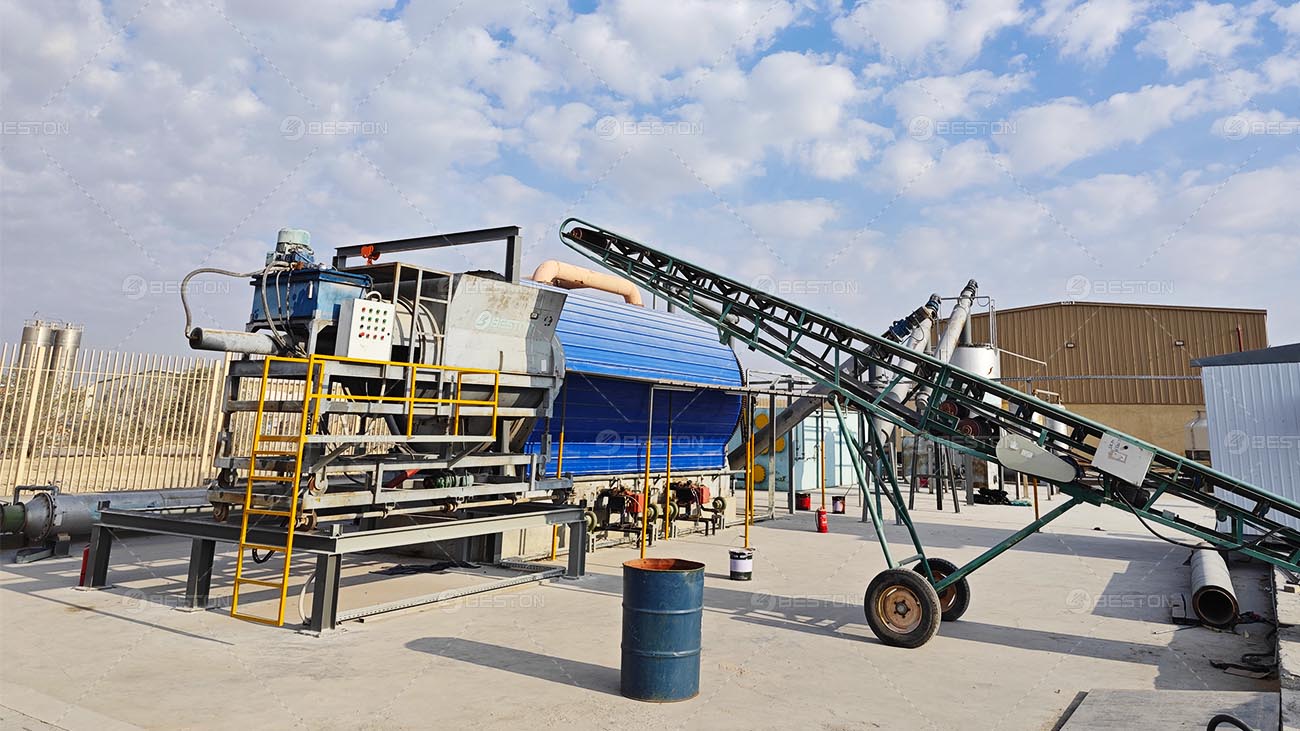
Commissioning of Beston BLJ-16 Pyrolysis Plant

Conclusion

The internal reaction mechanism of a tyre pyrolysis reactor is a multi-stage process that involves the thermal degradation of tyre components into valuable products. The depolymerization, cracking, and condensation reactions within the reactor are influenced by various factors, including temperature, pressure, and feedstock composition. Understanding these mechanisms is essential for optimizing the pyrolysis process and improving the efficiency of the reactor. Additionally, the cost-effectiveness of the tyre pyrolysis plant depends on the reactor’s design, operational efficiency, and the ability to generate profitable by-products. As technology advances, the internal reaction mechanisms within these reactors will continue to improve, further enhancing their economic and environmental benefits.